Three Peaches Beach — Ba Trai Dao in Vietnamese — is a small white-sand beach in Lan Ha Bay, tucked beneath three low islets off Cat Ba Island. Seen from the water, the three rounded islets, none of them much more than 23 metres high, sit on the sea like three peaches, and local legend credits a fairy and three stolen peaches of immortality for their shape. What decides a visit, though, is not the legend but the tide. The beach lies underwater for most of the day and surfaces for only about two to three hours around low tide, so a swim here runs on the sea’s schedule rather than the cruise’s. Lan Ha Bay cruises that call at Ba Trai Dao time the stop to that window — which makes it part swim stop, part small lesson in reading the water.
| Three Peaches Beach at a glance | |
|---|---|
| Where | Lan Ha Bay, off Cat Ba Island, over 20 km south-east of Bai Chay |
| The islets | Three small islets, about 23 m high, shaped like peaches |
| The beach | Small white-sand beach, exposed about 2–3 hours a day around low tide |
| The water | Clear and calm, of moderate depth — a natural swim stop while the sand is out |
| Known for | The fairy-and-peaches legend; a blessing for couples, in local belief |
| How you visit | By cruise tender only, on Lan Ha Bay itineraries, timed to the tide |
Where Is Ba Trai Dao?
Ba Trai Dao lies in Lan Ha Bay, the quieter bay that wraps the southern and eastern shores of Cat Ba Island, over 20 km south-east of the Bai Chay tourist port. Travellers often meet the name in Ha Long Bay material, because the two bays form one continuous limestone seascape and cruises are commonly sold under the Ha Long name — our Ha Long Bay vs Lan Ha Bay comparison works through where one bay ends and the other begins. Geographically, these islets belong to the Lan Ha side of that seascape. They also sit within the Cat Ba Archipelago, which was added to the UNESCO World Heritage property in 2023, extending the listing that began with Ha Long Bay to form the Ha Long Bay – Cat Ba Archipelago property.
There is no road, ferry or independent way in. Like almost every stop in these bays, Ba Trai Dao is reached by tender from a cruise ship anchored nearby — which is why the tide, and the itinerary you choose, matter more here than at any other beach in the area.

The Legend of the Three Peaches
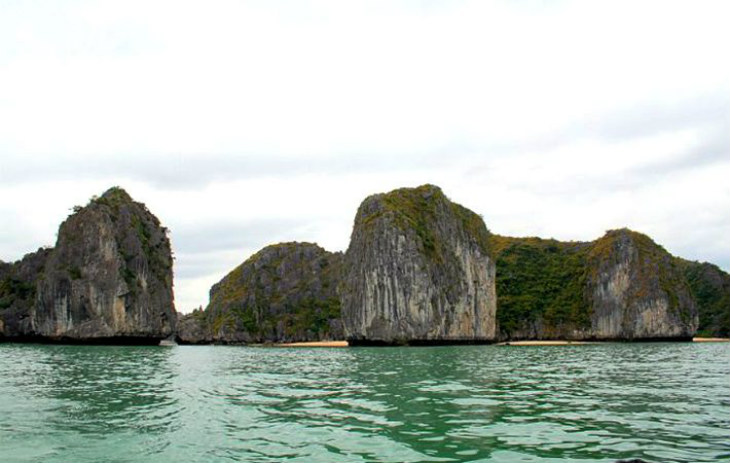
Two explanations travel with the name. The simpler one is in front of you: from a boat, the three low, round-topped islets look like three peaches resting on the water, and “Ba Trai Dao” simply means “three peaches”.
The second explanation is the story local guides prefer, and it is told as a legend. A fairy came down from heaven and fell in love with a poor mortal boy. Wanting him to live forever so that they could stay together, she stole three peaches of immortality from the heavenly orchard to give to him. The Jade Emperor discovered the theft and, in his anger, turned the three peaches into stone — the three islets that stand off Cat Ba today. The fairy never got her lover his eternal life. But the two of them, the story says, loved each other faithfully for the rest of their mortal lives, and the beach took its name from the peaches that became mountains. Local belief still holds that couples who come here together receive a blessing of happiness, which is why this small beach carries a quiet reputation as a lovers’ stop.
A Beach on Tidal Hours
The defining fact of Three Peaches Beach is that for most of the day it does not exist. The sand lies below the waterline and only the three islets show. As the tide falls, a small arc of white sand emerges at the foot of the islets; the site’s long-standing description of the place puts the window at about two to three hours a day, centred on low tide. Then the water returns and takes the beach back.
That single fact shapes everything about a visit. A cruise cannot fix this stop to a clock time the way it can a cave with a jetty: the crew reads the tide table for the day and slots Ba Trai Dao into the programme where the water allows. On some sailings the low-tide window falls at a workable hour and the tender goes in; on others it does not, and the ship passes the islets without a swim stop. If this beach is a priority for you, it is worth saying so when you book and asking how the itinerary handles the tide.
When the sand is out, the swimming is the gentle kind: clear water of moderate depth, sheltered between the islets, with light wind over it. When the sand is under water, a stop here — if the programme includes one — becomes a kayak or sightseeing pass around the islets instead, which is a different pleasure: the same peach-shaped silhouettes, seen from water level.
What a Stop Here Is Like
A stop at Ba Trai Dao is short and unbuilt. The tender lands you on the sand while it lasts; there are no facilities on the islets, and everything about the visit happens between the beach and the boat. The islets themselves are green, each carrying its own cover of plants, and the rocks are worn into odd shapes that guides point out as you circle them. It is a good place for photographs — three green humps on clear water, with Cat Ba’s larger mountains behind — and the swimming window concentrates the visit in a way a permanent beach never does: everyone is in the water at once, and everyone knows the sea has set the deadline.
How Cruises Visit Ba Trai Dao
Ba Trai Dao is a Lan Ha Bay stop, so it belongs to Lan Ha itineraries rather than to the classic Ha Long Bay circuit. In this fleet that means the Calypso Cruise routes through Lan Ha Bay. An earlier guide on this site tied the beach to a three-day, two-night Calypso schedule, and the logic still holds even as programmes change: a longer itinerary gives the crew more tide windows to work with, and a better chance of landing you on the sand. Whether a specific sailing stops depends on the itinerary and that day’s tide, so treat any listing of Ba Trai Dao as an intention, not a guarantee.
The season plays a part too. The warm months bring the best swimming water but also the bay’s storm season, when programmes are reshuffled at short notice; the cooler, calmer months trade water temperature for reliability. Our guide to the best time to visit Lan Ha Bay works through those trade-offs month by month.
Three Peaches, Ti Top or Soi Sim?
Travellers comparing swim stops across the two bays usually weigh this beach against Ha Long Bay’s two best-known ones. Ti Top Island offers a permanent crescent beach and the famous viewpoint climb of around 400 steps — and draws the crowds to match. Soi Sim Islet, a few minutes from Ti Top, is the quieter permanent option: a smaller beach and a shaded hill, but the sand is always there. Three Peaches is the only one of the three that can vanish. There is no viewpoint to climb and no beach you can count on at an arbitrary hour — but there is a wilder feel, a good story, and usually the water largely to yourselves.
| Ti Top | Soi Sim | Three Peaches (Ba Trai Dao) | |
|---|---|---|---|
| Bay | Ha Long Bay | Ha Long Bay | Lan Ha Bay |
| Beach | Permanent crescent | Permanent, small | Tide-dependent, about 2–3 hours a day |
| Main draw | The 400-step panorama | A quiet, green island stop | The legend and the tidal beach |
| Crowds | Busy at peak landing times | Light | Lightest — when the tide allows |
A beach that keeps tidal hours will not suit every itinerary, and it is not meant to. But travellers who catch Ba Trai Dao with its sand showing tend to remember it out of proportion to its size: three stone peaches, a fairy’s failed gift, and a small white beach that the sea lends out for a few hours a day and then takes back. If that sounds like your kind of stop, look for it by name when you browse the Lan Ha Bay cruises — and ask about the tide window when you book, because here the tide table is the timetable.
Frequently Asked Questions
What is Three Peaches Beach (Ba Trai Dao)?
Three Peaches Beach is a small white-sand beach in Lan Ha Bay, off Cat Ba Island, lying beneath three low islets. "Ba Trai Dao" means "three peaches" — from the water, the three rounded islets, each about 23 metres high, look like three peaches resting on the sea.
Why is it called Three Peaches Beach?
Partly the shape, and partly a legend. Local story says a fairy fell in love with a mortal boy and stole three peaches of immortality from heaven so they could stay together forever. The Jade Emperor discovered the theft and turned the peaches into stone — the three islets. The couple never gained eternal life, but loved each other for the rest of their lives, and local belief holds that couples who visit the beach receive a blessing of happiness.
When can you swim at Three Peaches Beach?
Only around low tide. The beach lies underwater for most of the day and emerges for roughly two to three hours a day as the tide falls. Cruises that stop here time the visit to that window, so there is no fixed clock time for a swim — it depends on the tide table for the day of your sailing.
Where is Ba Trai Dao — Ha Long Bay or Lan Ha Bay?
Lan Ha Bay. The islets stand off Cat Ba Island, over 20 km south-east of Bai Chay. They are often mentioned in Ha Long Bay material because the two bays form one continuous limestone seascape and cruises are usually sold under the Ha Long name, but geographically Ba Trai Dao belongs to Lan Ha Bay, within the Cat Ba Archipelago.
How do you visit Three Peaches Beach?
By boat only. There is no road or ferry to the islets; you arrive by tender from a cruise ship anchored nearby, on a Lan Ha Bay itinerary. If the beach is a priority, ask when booking whether the itinerary includes Ba Trai Dao and how the crew handles the tide window on that sailing.
Do all Lan Ha Bay cruises stop at Three Peaches Beach?
No. Ba Trai Dao is one of Lan Ha Bay's smaller stops, and whether a sailing calls there depends on the itinerary and on the day's tide — some programmes pass the islets without a swim stop. Longer itineraries give the crew more tide windows to work with and a better chance of landing you on the beach.