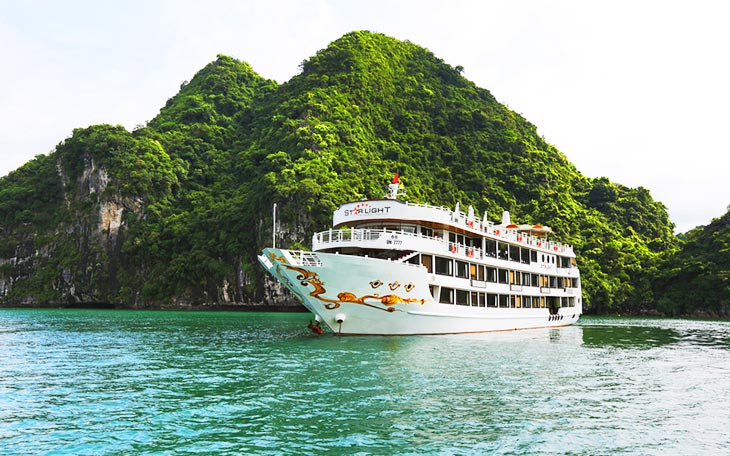
Why Is Ha Long Bay Famous?
Ha Long Bay is famous for its spectacular limestone karst landscape, emerald waters, dramatic caves and grottoes, and exceptional natural beauty. Its landscape was shaped over millions of years, creating thousands of limestone islands and islets that rise dramatically from the sea.
The bay is also internationally recognized for its geological and scenic value. Ha Long Bay was inscribed on the UNESCO World Heritage List in 1994 for its outstanding scenic beauty and received a further inscription in 2000 recognizing its geological and geomorphological significance. In 2023, the World Heritage property was extended to include the Cat Ba Archipelago and is now officially known as Ha Long Bay – Cat Ba Archipelago
What Is Ha Long Bay Famous For?
There are several reasons Ha Long Bay has become one of Vietnam’s most recognizable natural destinations.
Its spectacular limestone karst landscape
The most distinctive feature of Ha Long Bay is its extraordinary collection of limestone islands and towers rising from the sea.
Rather than forming a continuous coastline, the limestone landscape appears as hundreds of individual peaks, cliffs and islands separated by calm waters. Their shapes, vegetation and changing appearance create the scenery that has become synonymous with Ha Long Bay.
UNESCO describes the Ha Long Bay – Cat Ba Archipelago property as an outstanding example of fengcong and fenglin karst, with limestone formations shaped by tropical conditions and later invaded by the sea.
This is one of the reasons photographs of Ha Long Bay are so instantly recognizable.
From the deck of a cruise, the landscape constantly changes. Islands that appear close together from one direction can seem completely different as the boat moves between them.
Its extraordinary geological history
Ha Long Bay is not simply beautiful; its landscape tells a much older geological story.
The limestone formations have developed through a long interaction between rock, water, climate and geological change. Over geological time, the landscape was gradually shaped into the towers, cliffs, caves and other karst features visible today.
UNESCO considers Ha Long Bay – Cat Ba Archipelago one of the world’s most important areas of marine-invaded tower karst and recognizes its geological significance under criteria (vii) and (viii).
This geological story helps explain why the bay looks so different from an ordinary coastal landscape.
The islands are not simply mountains rising from the sea. They are part of a much larger karst system shaped by geological processes over immense periods of time.
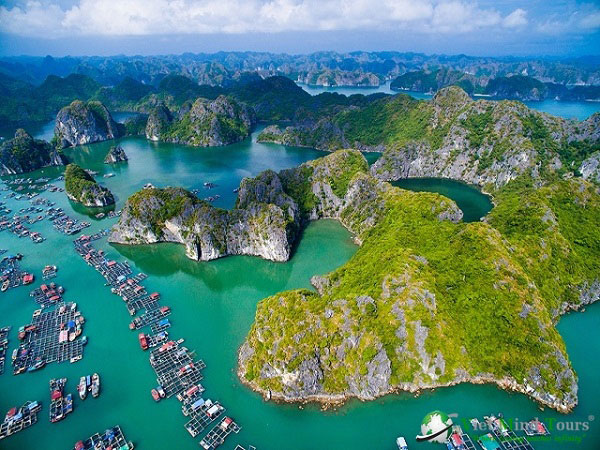 Ha Long Bay is a world-famous natural wonder. Photo: internet
Its UNESCO World Heritage status
Ha Long Bay’s international reputation is closely connected with its UNESCO recognition.
The original Ha Long Bay property was inscribed on the World Heritage List in 1994, recognizing its outstanding scenic value. In 2000, UNESCO recognized its geological and geomorphological value as well.
In 2023, UNESCO approved a significant boundary modification that added the Cat Ba Archipelago to the property. The expanded site is now known as Ha Long Bay – Cat Ba Archipelago.
The designation is important because it goes beyond simply saying that Ha Long Bay is beautiful.
UNESCO recognizes the area for both its exceptional landscape and its geological significance.
That combination is one of the reasons Ha Long Bay has such a strong international reputation.
Its caves, grottoes and hidden lagoons

The limestone landscape has also created an extensive system of caves, grottoes and other natural features.
Some caves are large chambers filled with stalactites and stalagmites, while other areas are smaller and more enclosed, opening into quiet stretches of water.
Sung Sot Cave, for example, is one of the best-known caves visited on Ha Long Bay itineraries. Its large chambers and distinctive limestone formations make it one of the area’s classic attractions.
Another very different experience can be found at Luon Cave, where visitors can travel by kayak or bamboo boat through a natural opening into a tranquil enclosed lagoon surrounded by steep limestone cliffs.
These experiences demonstrate another reason Ha Long Bay is so famous:
The landscape is not something you only look at from a distance. You can enter it, paddle through it and explore it from the water.
Its unique experience from the water
Perhaps the best way to understand Ha Long Bay is from a boat.
From land, you can appreciate individual viewpoints and islands. But on the water, the scale of the landscape becomes much clearer.
A cruise allows travelers to move between limestone formations, watch the scenery change throughout the day and experience the bay at different times of day.
Activities such as kayaking and bamboo boat trips provide an even closer perspective. Instead of seeing the limestone cliffs from a large vessel, you can move quietly across the water and explore smaller passages and sheltered areas.
For travelers visiting Ha Long Bay for the first time, this is often what transforms the destination from a beautiful photograph into a memorable experience.
Oriental Sails currently offers overnight itineraries that combine cruising with attractions such as Sung Sot Cave, Ti Top Island and Luon Cave, as well as activities including kayaking and bamboo boat experiences.
Is Ha Long Bay a Natural Wonder?
Yes. Ha Long Bay is widely regarded as one of the world’s most remarkable natural landscapes, and it was selected as one of the New 7 Wonders of Nature through the global campaign organized by New7Wonders.
The recognition reflects what makes the bay so distinctive: a vast seascape filled with limestone islands, towering karst formations, caves and sheltered waters. For centuries, the landscape has inspired stories and admiration, while in more recent times it has become one of Vietnam’s best-known natural attractions.
Ha Long Bay’s international recognition also comes from more than one organization. It is important to distinguish the New 7 Wonders of Nature designation from its UNESCO World Heritage status, as they recognize the area in very different ways.
New 7 Wonders of Nature
Ha Long Bay was selected as one of the New 7 Wonders of Nature following a worldwide campaign and public voting process organized by New7Wonders.
It was selected alongside six other natural destinations: the Amazon, Iguazu Falls, Jeju Island, Komodo, Puerto Princesa Underground River and Table Mountain.
The recognition helped strengthen Ha Long Bay’s international profile, particularly among travelers who may have first encountered the destination through photographs, travel publications or lists of the world’s most spectacular natural places.
It is worth noting, however, that New 7 Wonders of Nature is not the same thing as UNESCO World Heritage status.
How Is UNESCO Recognition Different?
UNESCO recognizes places that have outstanding universal value and are considered important to humanity’s natural or cultural heritage.
Ha Long Bay was first inscribed on the UNESCO World Heritage List in 1994, primarily for its exceptional scenic beauty. Its geological and geomorphological significance was subsequently recognized in 2000. In 2023, the World Heritage property was extended to include the Cat Ba Archipelago and is now officially known as Ha Long Bay – Cat Ba Archipelago.
 Ha Long Bay a once-in-a-lifetime destination: US publication. Photo: internet
This distinction matters because UNESCO’s recognition is based on the area’s heritage and scientific significance, rather than on a public popularity vote.
In other words, Ha Long Bay has gained international recognition in two quite different ways: UNESCO recognizes its outstanding natural and geological value, while New7Wonders recognizes it as one of the world’s seven selected natural wonders.
Is Ha Long Bay One of the 7 Wonders of the World?
This is one of the most common questions about Ha Long Bay, but the answer depends on which list of “7 Wonders” you mean.
Ha Long Bay is not one of the New 7 Wonders of the World. That list, announced in 2007, consists of famous man-made landmarks such as the Great Wall of China, Petra and Machu Picchu.
Ha Long Bay belongs to a different list: the New 7 Wonders of Nature.
That means the commonly heard statement that “Ha Long Bay is one of the 7 Wonders of the World” is not quite accurate. A better description is that Ha Long Bay is one of the New 7 Wonders of Nature.
The distinction may seem small, but it helps avoid confusion between two separate global campaigns — one focused on remarkable human-made structures and the other on extraordinary natural landscapes.
What Can You Do in Ha Long Bay?
One of the reasons Ha Long Bay remains such a memorable destination is that its landscape is best experienced from the water. Instead of simply viewing the limestone islands from a lookout, visitors can cruise between them, enter caves and lagoons, paddle along quiet waterways and climb to viewpoints overlooking the bay.
The activities may vary depending on the cruise itinerary, weather and sea conditions, but several experiences have become an essential part of discovering this extraordinary seascape.
Take an overnight cruise
An overnight cruise allows you to experience the landscape over a longer period rather than visiting only for a few hours. The changing light from afternoon to sunset and sunrise creates very different views of the limestone formations. For travelers who want a more relaxed introduction to the bay, an overnight journey can be particularly rewarding.
Oriental Sails offers 2-day, 1-night and 3-day, 2-night itineraries designed around an overnight experience in the bay.
Explore Luon Cave by kayak or bamboo boat

Hidden behind a natural limestone arch, Luon Cave offers a very different experience from the larger caves and open waters of Ha Long Bay. The entrance is low and narrow, and passing through it leads to a peaceful enclosed lagoon surrounded by steep limestone cliffs.
The sheltered setting makes the area particularly enjoyable to explore by kayak or traditional bamboo boat. Rather than simply looking at the karst formations from a cruise ship, visitors can move quietly across the water and see the cliffs from much closer.
For those who choose to kayak, the experience also provides a greater sense of freedom. You can paddle at your own pace, take in the reflections on the water and appreciate the unusual shape of the surrounding cliffs. A bamboo boat offers a more relaxed alternative, with a local rower guiding visitors through the area.
The atmosphere can be especially peaceful when the water is calm. The combination of the natural arch, enclosed lagoon and towering limestone walls gives Luon Cave a sense of being separated from the busier parts of the bay.
Luon Cave is therefore less about a dramatic viewpoint and more about experiencing the quieter, enclosed side of Ha Long Bay.
Visit Sung Sot Cave
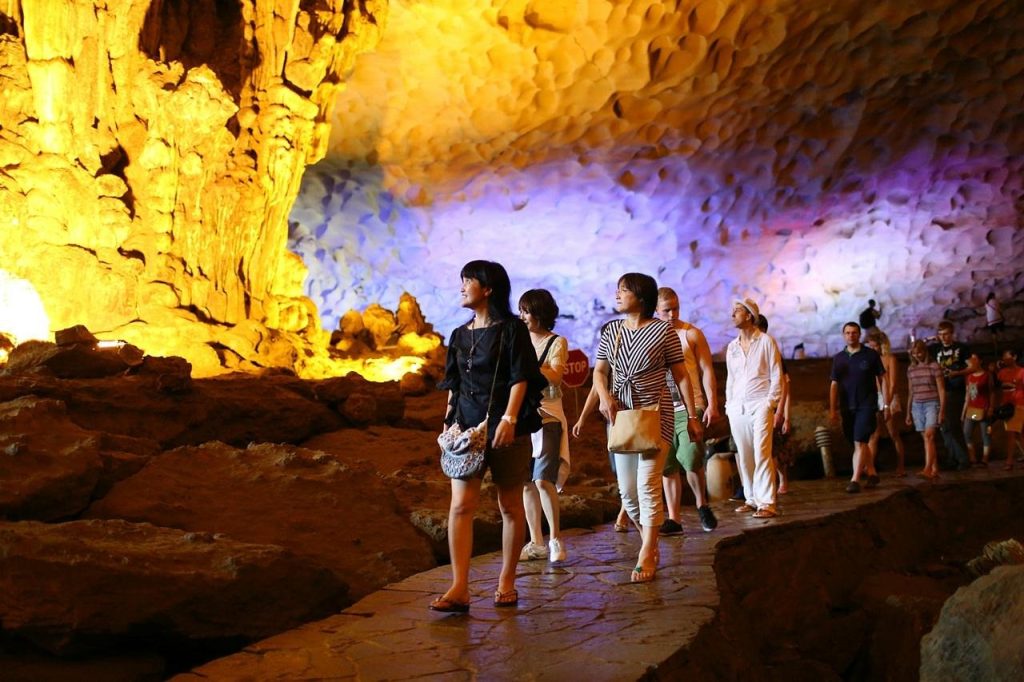
For a completely different perspective, a visit to Sung Sot Cave takes visitors inside the limestone landscape itself.
Also known as Surprise Cave, Sung Sot is one of the best-known caves in the bay. The journey begins with a climb through the forested hillside before reaching the cave entrance. Inside, the passage opens into a series of large chambers filled with stalactites, stalagmites and other naturally formed limestone features.
The scale is part of what makes the cave impressive. After entering through a relatively modest opening, visitors gradually find themselves in much larger spaces, with high ceilings and dramatic rock formations illuminated along the walking route.
The cave also provides a useful contrast to the scenery outside. On the water, Ha Long Bay is defined by its towering islands and open seascape. Inside Sung Sot Cave, the focus shifts to the geological structures hidden within those same limestone formations.
A visit usually involves walking along established paths and steps, so comfortable footwear is recommended. The climb and walk also mean that Sung Sot Cave is more active than simply sightseeing from a cruise deck, but the changing views inside make the effort worthwhile.
For many visitors, Sung Sot Cave is one of the highlights of a Ha Long Bay cruise because it reveals a completely different side of the landscape.
Climb Ti Top Island

Ti Top Island is known for its crescent-shaped beach and viewpoint overlooking the surrounding seascape.
For visitors who enjoy combining scenery with a little physical activity, climbing to the viewpoint offers a completely different perspective of the bay.
Kayak among the limestone formations

Kayaking is one of the most direct ways to experience the landscape.
From the deck of a cruise ship, the limestone formations appear as part of a vast panorama. In a kayak, however, the perspective changes. The cliffs rise much more dramatically above you, while the movement of the boat allows you to explore smaller areas that cannot be reached by a large vessel.
Depending on the itinerary and conditions, kayaking may take visitors around limestone islands, through narrow passages or toward quieter areas of the bay. The relatively low position on the water also makes it easier to notice details that can be missed from a larger boat — reflections on the surface, vegetation growing on the cliffs and the changing shapes of the karst formations.
There is also something inherently peaceful about kayaking here. When the water is calm, the surrounding landscape can feel remarkably quiet, with only the sound of the paddle breaking the surface.
For first-time visitors, this is often when the scale and character of Ha Long Bay become more tangible. You are no longer simply looking at the landscape; you are moving through it.
Kayaking does require suitable weather and sea conditions, and the exact locations available can depend on the cruise itinerary and local regulations. When conditions are suitable, however, it is one of the most rewarding ways to experience the quieter side of the bay.
Why Is Ha Long Bay Worth Visiting?
Ha Long Bay is worth visiting because the experience goes beyond seeing a famous Vietnamese landmark.
It is the combination of:
- a globally significant limestone karst landscape;
- UNESCO World Heritage recognition;
- the New 7 Wonders of Nature designation;
- caves, grottoes and hidden lagoons;
- kayaking and bamboo boat experiences;
- overnight cruising;
- Vietnamese legends and cultural heritage;
- and the opportunity to experience the landscape from the water.
For a first-time visitor to Vietnam, Ha Long Bay offers something relatively unusual: a destination where the journey itself is part of the attraction.
You are not simply traveling toward a viewpoint.
You are moving through the landscape.
Why Has Ha Long Bay Become So Famous Around the World?
Ha Long Bay’s international reputation has developed over many years through a combination of heritage recognition, tourism and international media attention.
Its UNESCO status established its importance on the global heritage map, while its selection as one of the New 7 Wonders of Nature further increased its international visibility.
International travel publications have also helped introduce the bay to travelers around the world.
This includes the type of recognition that inspired the original article on Oriental Sails.
However, the reason Ha Long Bay continues to attract visitors is ultimately simpler:
the landscape itself is extraordinary.
Ha Long Bay: A Natural Wonder Best Experienced Slowly
Ha Long Bay is famous because it combines extraordinary scenery with geological importance and a distinctive way of experiencing nature.
Its limestone islands and karst towers create the visual identity of the bay. Its caves and lagoons invite exploration. UNESCO recognition reflects its exceptional natural and geological value, while its New 7 Wonders of Nature designation has given it another layer of international recognition.
But perhaps the best way to understand why Ha Long Bay is so famous is not to look at another photograph.
It is to see the limestone islands appear around the bow of a boat, watch the landscape change as the light moves across the water, and spend enough time on the bay to experience more than a single viewpoint.
That is what makes Ha Long Bay more than a famous destination. It is a landscape best experienced from within it.