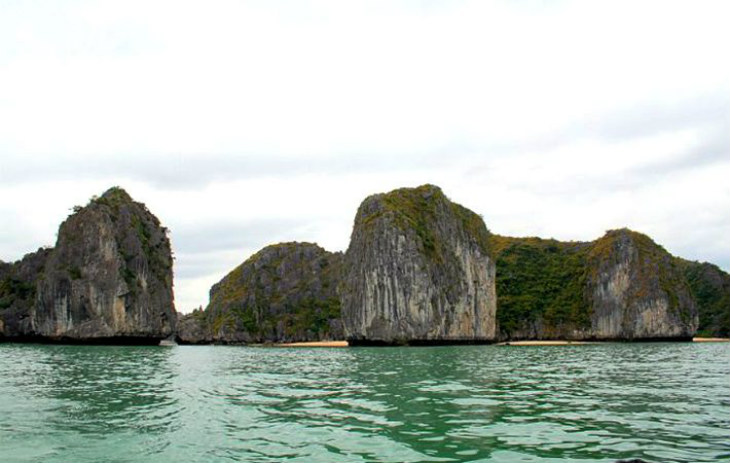
Thien Canh Son Cave is a stalactite cave on Hon Co Island in Bai Tu Long Bay — the quieter bay that stretches north-east of Ha Long Bay — inside the Cong Do conservation area. You will often see it labelled a Ha Long Bay cave, including in older pages of ours, because the two bays form one limestone seascape and most cruises are sold under the Ha Long name. Geographically, though, the cave belongs to Bai Tu Long, and that is exactly what shapes the stop. A tender drops you on the small white-sand beach below the island, a stepped path climbs through the trees to the cave mouth, and inside are two chambers of yellow-brown stalactites, lit in places by daylight falling through cracks in the ceiling. The way back down ends where you started, on the beach — so this is a cave visit and a beach stop rolled into one, in the part of the bay system where far fewer boats go.
The cave is also called Co Cave. Its tourism name, Thien Canh Son, points at the scenery — roughly, a landscape out of heaven — and the path up, running below the forest canopy and a stone cliff, does feel like climbing towards it.
| Thien Canh Son Cave at a glance | |
|---|---|
| Location | Hon Co Island, Cong Do conservation area |
| Bay | Bai Tu Long Bay, north-east of Ha Long Bay |
| Also known as | Co Cave |
| Getting there | Cruise tender to the beach below the cave, then a stepped path |
| The climb | Stone steps from the beach — shallow and not steep |
| Inside | Two chambers joined by a narrow passage |
| The stop combines | The cave visit + the white-sand beach below it |
| Found on | Bai Tu Long itineraries (sightseeing Route 4) |
Where Is Thien Canh Son Cave?
The cave sits on Hon Co Island in the Cong Do conservation area of Bai Tu Long Bay. Bai Tu Long is the north-eastern arm of the same karst seascape as Ha Long Bay: same limestone islands, same emerald water, but a fraction of the boat traffic, because most itineraries — and nearly all day trips — stay on the classic Ha Long Bay routes further south.
One point is worth stating plainly, because so many pages get it wrong: Bai Tu Long Bay is not part of the UNESCO World Heritage property. The inscribed property covers Ha Long Bay and the Cat Ba Archipelago; Bai Tu Long lies outside it. That does not make the scenery lesser — the geology is continuous — but it does mean any page that sells this cave as a World Heritage stop is mistaken, and travellers who care about the distinction should know it before they book rather than after.
The Climb From the Beach
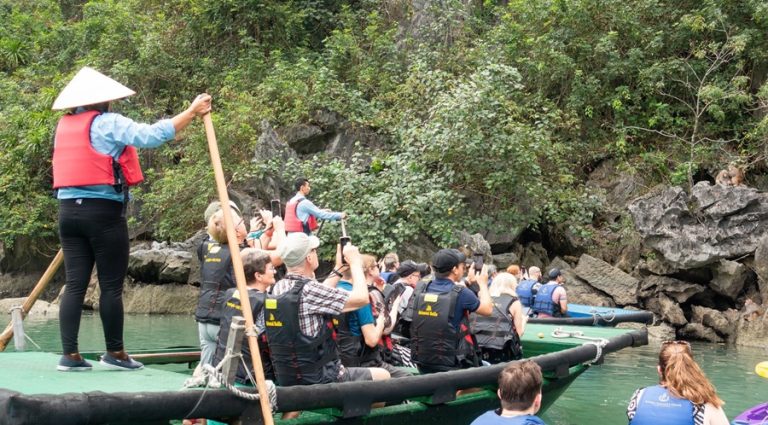
Boats anchor off Hon Co Island and tenders land on the beach at its foot. From the sand, a path of stone steps climbs to the cave mouth, running under the forest canopy and below a stone cliff. The steps are shallow and not steep, and the climb is a short one — most visitors find it takes little effort, and it is the only real exertion in the stop.
There is no way up to the cave except the steps. Anyone who would rather not climb can simply stay on the beach below, which is a perfectly good place to spend the stop.

Inside the Two Chambers
Thien Canh Son is a moderate-sized cave by the standards of this coastline, and it is divided into two compartments connected by a narrow passage. What it lacks in sheer scale it makes up for in the density of its formations — the stalactites crowd close here, and the shapes are easy to pick out.
The first chamber
The first compartment is quite small. Its stalactites run yellow-brown, giving the chamber a warm, close feel, and among them visitors are shown the shapes the cave is known for: a lotus, a baby elephant, stone statues, seals and flowers. The ceiling is covered with a layer of shiny stone the old descriptions call a carpet, and the stalactites hanging from it catch the light like hanging lamps.

The second chamber
Squeeze through the narrow connecting passage and the space suddenly opens out. The second chamber is larger, its stalactite system richer and more varied, with formations hanging from the ceiling like the curtains of a stage. Its highlight is the natural light: daylight enters through cracks in the cave ceiling, and on sunny days those shafts of light are the thing visitors photograph most.
At the end of the cave, a small path leads out to a view over the bay — limestone ranges, passing ships, blue sea and the white sand below, framed by the island’s own vegetation of old trees, conifers, vines and flowering plants.
The Beach Below the Cave
The return path brings you back down to the little white-sand beach where the tender landed. This is the second half of the stop, and on a warm day it is the half many visitors enjoy most: swimming in the gentle waves, sunbathing, collecting shells, or simply sitting in the sea breeze. Groups sometimes play team-building games on the sand. If your boat calls late in the day, this is also a fine place to watch the light change over the bay before the tender takes you back.
The pairing is the point. On the classic Ha Long Bay routes, a cave stop is a cave stop — you climb, you walk through, you re-board. Here the cave and the beach are one landing, and the stop moves at the slower pace that Bai Tu Long itineraries are chosen for.
How Thien Canh Son Differs From the Big Ha Long Bay Caves
Travellers who have walked through Sung Sot Cave will notice the contrast immediately. Sung Sot is a show cave on a grand scale — vast chambers, a long lit walkway, and a steady flow of visitors on the classic route. Thien Canh Son is smaller in every dimension: two chambers instead of two caverns, formations you stand close to rather than look across at, and a path that ends at a viewpoint and a beach instead of a souvenir terrace.
The other difference is the company you keep. Bai Tu Long routes carry fewer boats than the central Ha Long Bay circuit, so the chambers and the beach are rarely as crowded as the famous caves at peak landing times. If you have already done the big caves on a previous trip, this stop feels less like a repeat and more like the same coastline at a quieter volume.
Which Cruises Visit Thien Canh Son Cave?
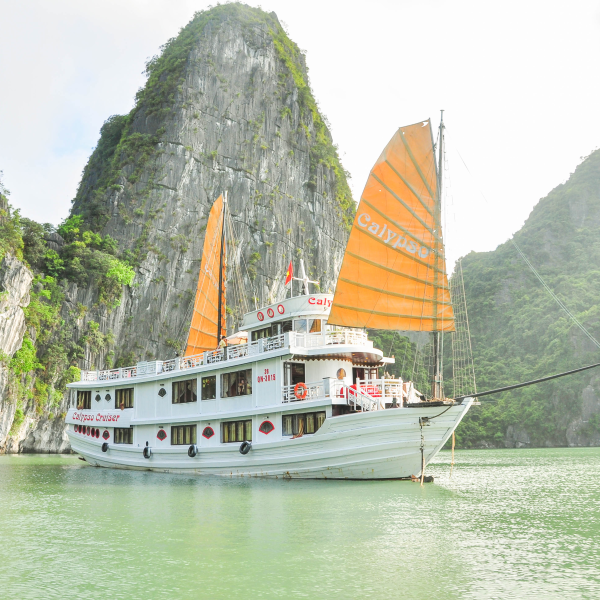
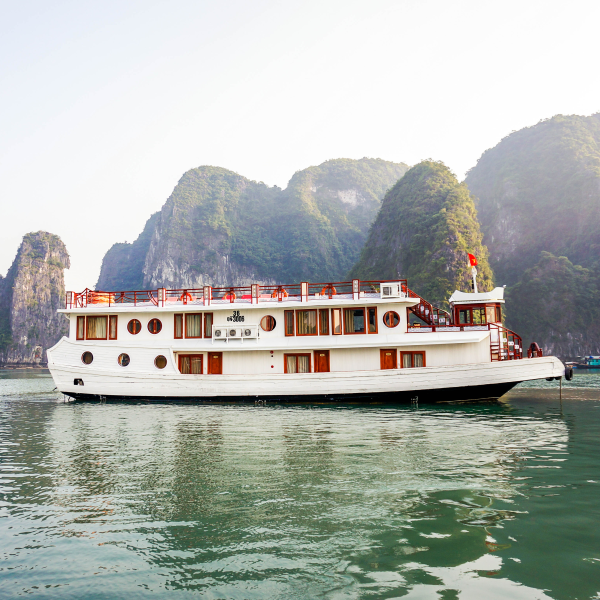
Thien Canh Son is a stop on Bai Tu Long itineraries — the sightseeing Route 4 side of the bay system — so it appears on overnight cruises that route through Bai Tu Long rather than on the classic Ha Long Bay circuit or on Lan Ha Bay itineraries. That makes the bay, not the cave, the real booking decision: if comparing Ha Long Bay and Lan Ha Bay has you leaning towards quiet water and fewer boats, Bai Tu Long is the third option worth weighing, and this cave is one of its named stops.
On a two-day Bai Tu Long cruise the cave is one stop among several; a three-day itinerary gives the bay more time and usually a slower version of the same landing — the how many days in Ha Long Bay question applies to Bai Tu Long in the same way. Because fleets adjust their Bai Tu Long schedules, check that the specific itinerary you are booking names Thien Canh Son (or the Cong Do stop) before you rely on seeing it.
A Quiet Cave, an Honest Label
Thien Canh Son will not out-dazzle the great caves of the classic route, and it does not try to. What it offers is a pretty, closely decorated cave, a short climb through the trees, and a white-sand beach waiting at the bottom — on the bay next door to the famous one, without the famous one’s crowds. For travellers choosing a Bai Tu Long cruise, it is one of the stops that justifies the choice.
You can see which of the current cruises route through Bai Tu Long, and browse the wider Ha Long Bay caves guides if you are comparing stops across both bays.
Frequently Asked Questions
Where is Thien Canh Son Cave — Ha Long Bay or Bai Tu Long Bay?
Bai Tu Long Bay. The cave is on Hon Co Island in the Cong Do conservation area of Bai Tu Long Bay, the quieter bay north-east of Ha Long Bay. It is often labelled a Ha Long Bay cave because the two bays form one limestone seascape and cruises are usually sold under the Ha Long name, but geographically the cave belongs to Bai Tu Long.
Is Thien Canh Son Cave part of the UNESCO World Heritage site?
No. The World Heritage property covers Ha Long Bay and the Cat Ba Archipelago. Bai Tu Long Bay lies outside the inscribed area, even though it shares the same limestone seascape. The cave is a Bai Tu Long attraction, and pages that describe it as a World Heritage stop are mistaken.
How hard is the climb to Thien Canh Son Cave?
It is a short climb up stone steps from the beach where the tender lands. The steps are shallow and not steep, and most visitors find the climb takes little effort. There is no step-free route to the cave, but anyone who prefers not to climb can stay on the beach below and still enjoy the stop.
What is inside Thien Canh Son Cave?
Two chambers joined by a narrow passage. The first is small, with yellow-brown stalactites in shapes visitors are shown as a lotus, a baby elephant, statues, seals and flowers, under a shiny stone ceiling. The second chamber is larger, with richer formations hanging like stage curtains and daylight entering through cracks in the ceiling — on sunny days that natural light is the highlight.
Can you swim at the Thien Canh Son stop?
Yes — the cave stands above a small white-sand beach, and the tender lands there, so the stop combines the cave with the beach. Visitors swim in the gentle waves, sunbathe and collect shells on the sand. How long you get on the beach depends on your cruise's schedule for the day.
Which cruises visit Thien Canh Son Cave?
Cruises with Bai Tu Long itineraries — the sightseeing Route 4 side of the bay system. It is not a stop on the classic Ha Long Bay route or on Lan Ha Bay itineraries. Because fleets adjust their Bai Tu Long schedules, check that the specific itinerary you book names Thien Canh Son or the Cong Do stop.